 Image 1 of 8
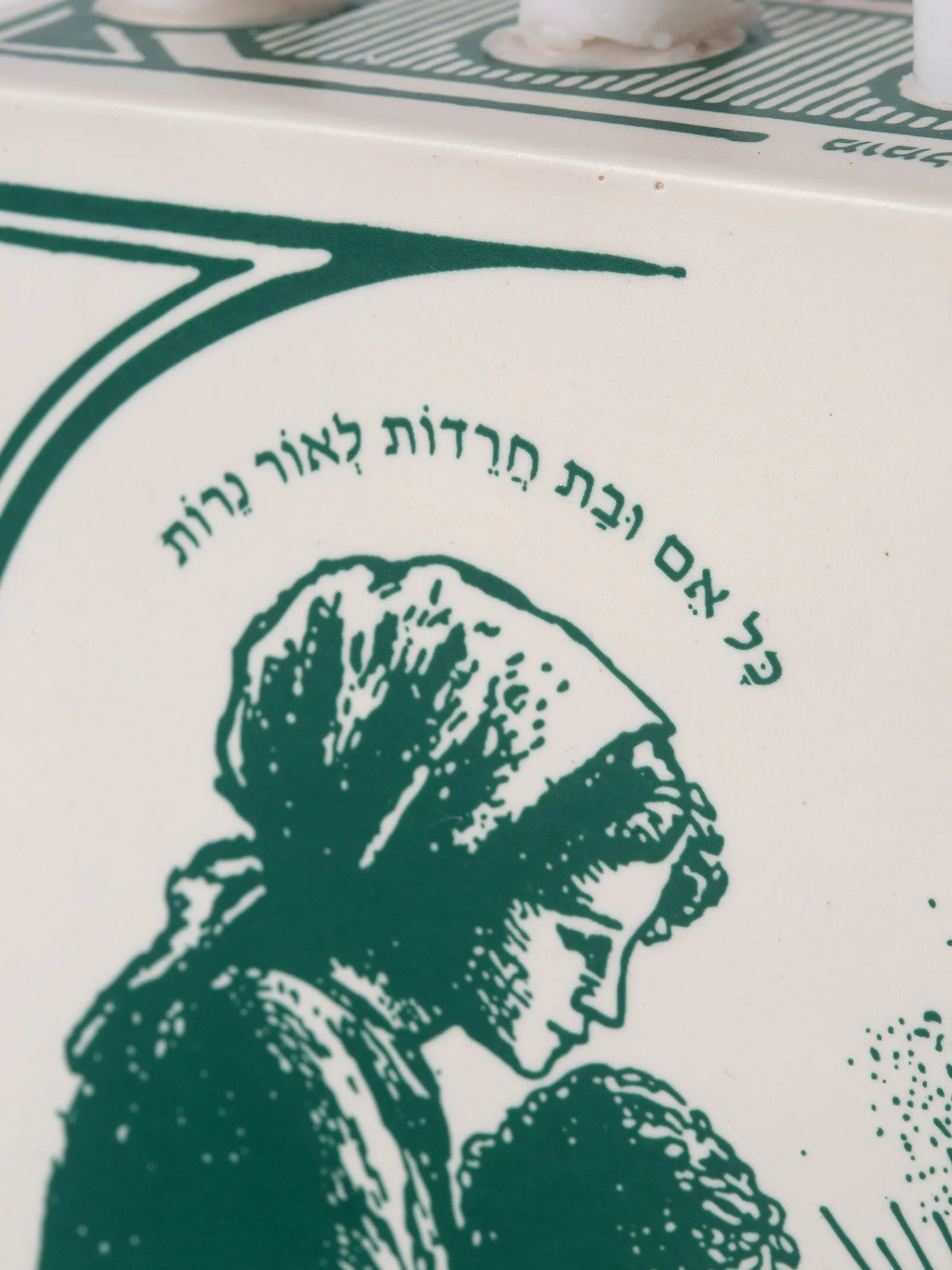 Image 2 of 8
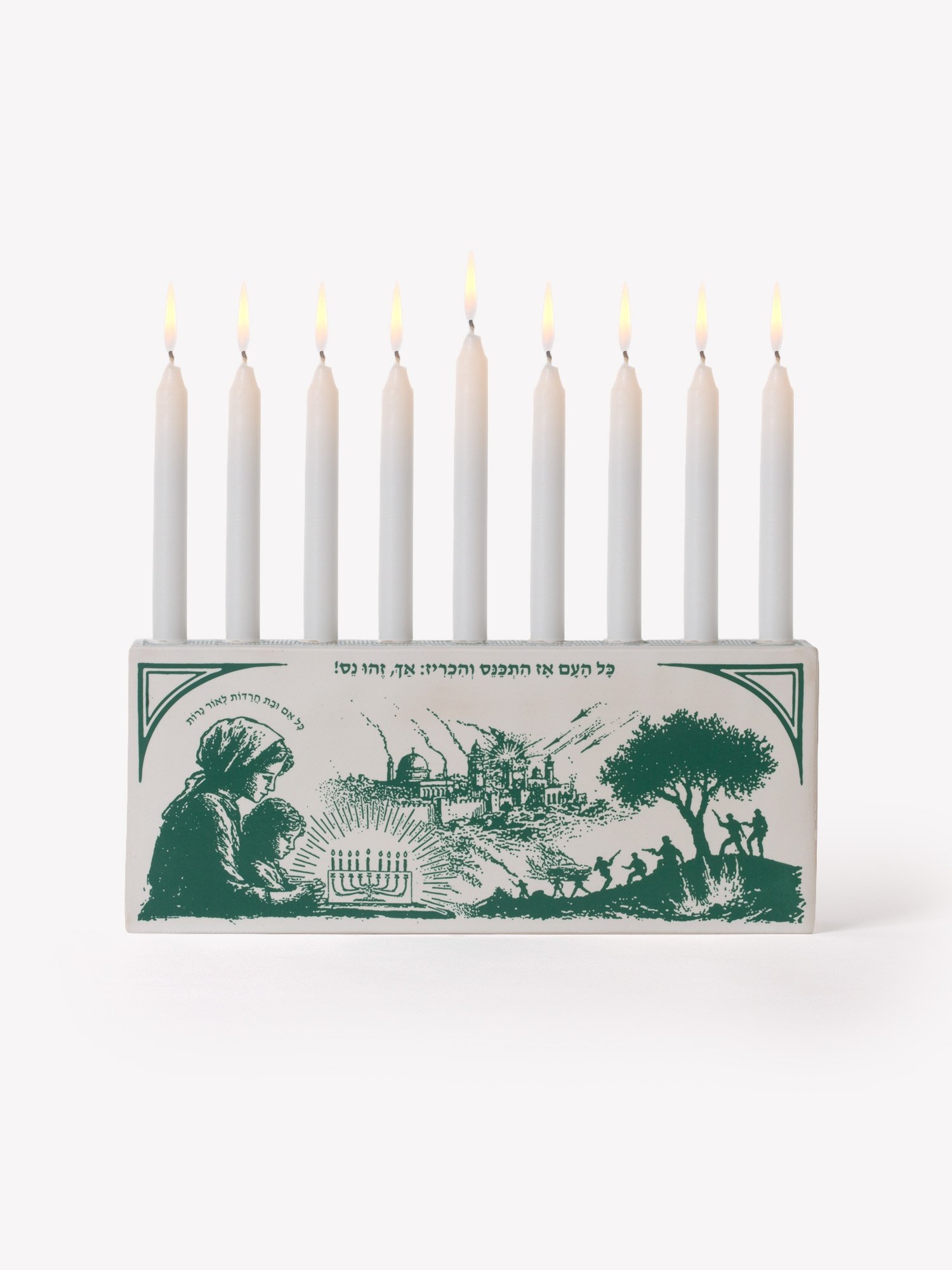 Image 3 of 8
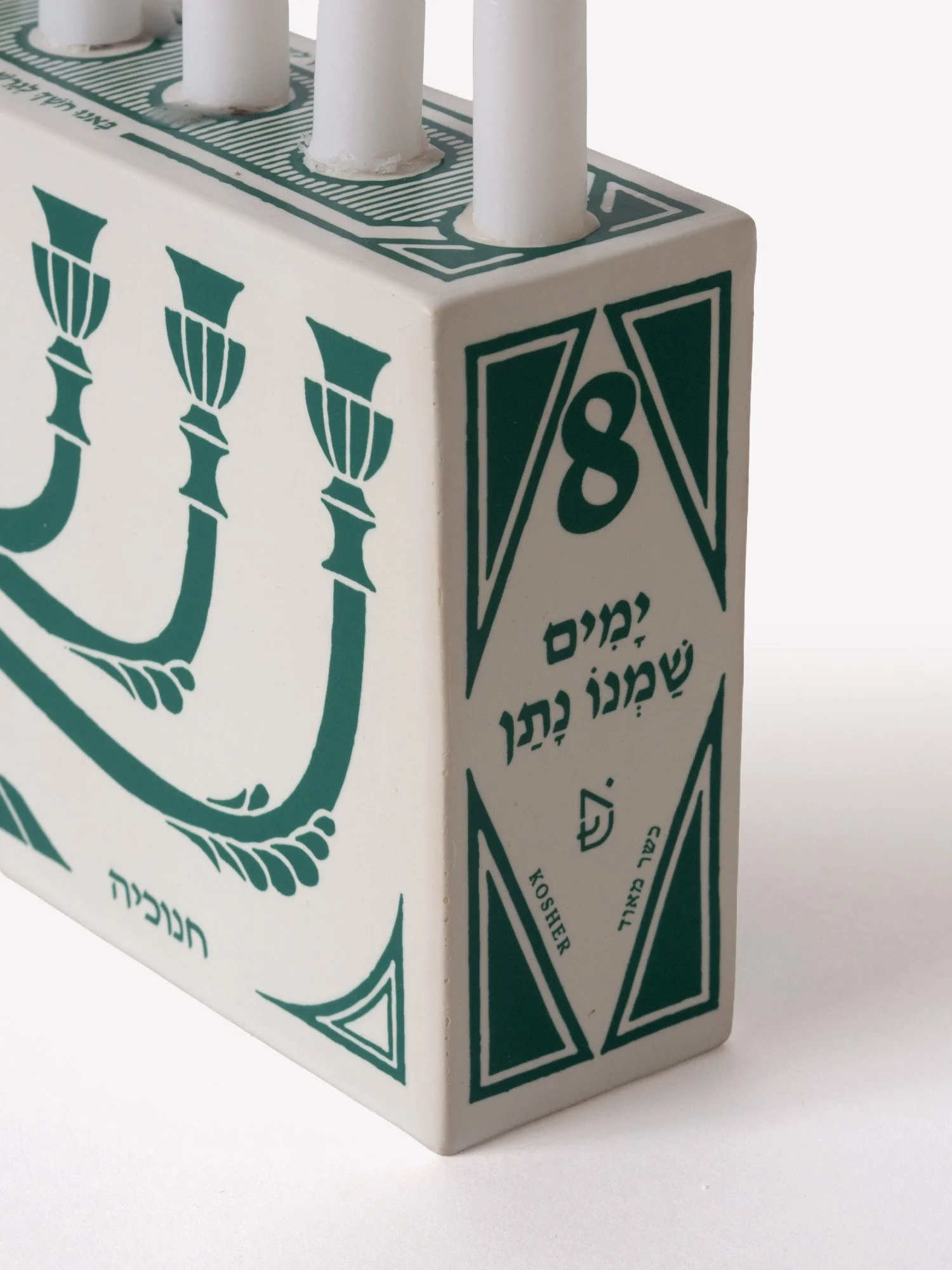 Image 4 of 8
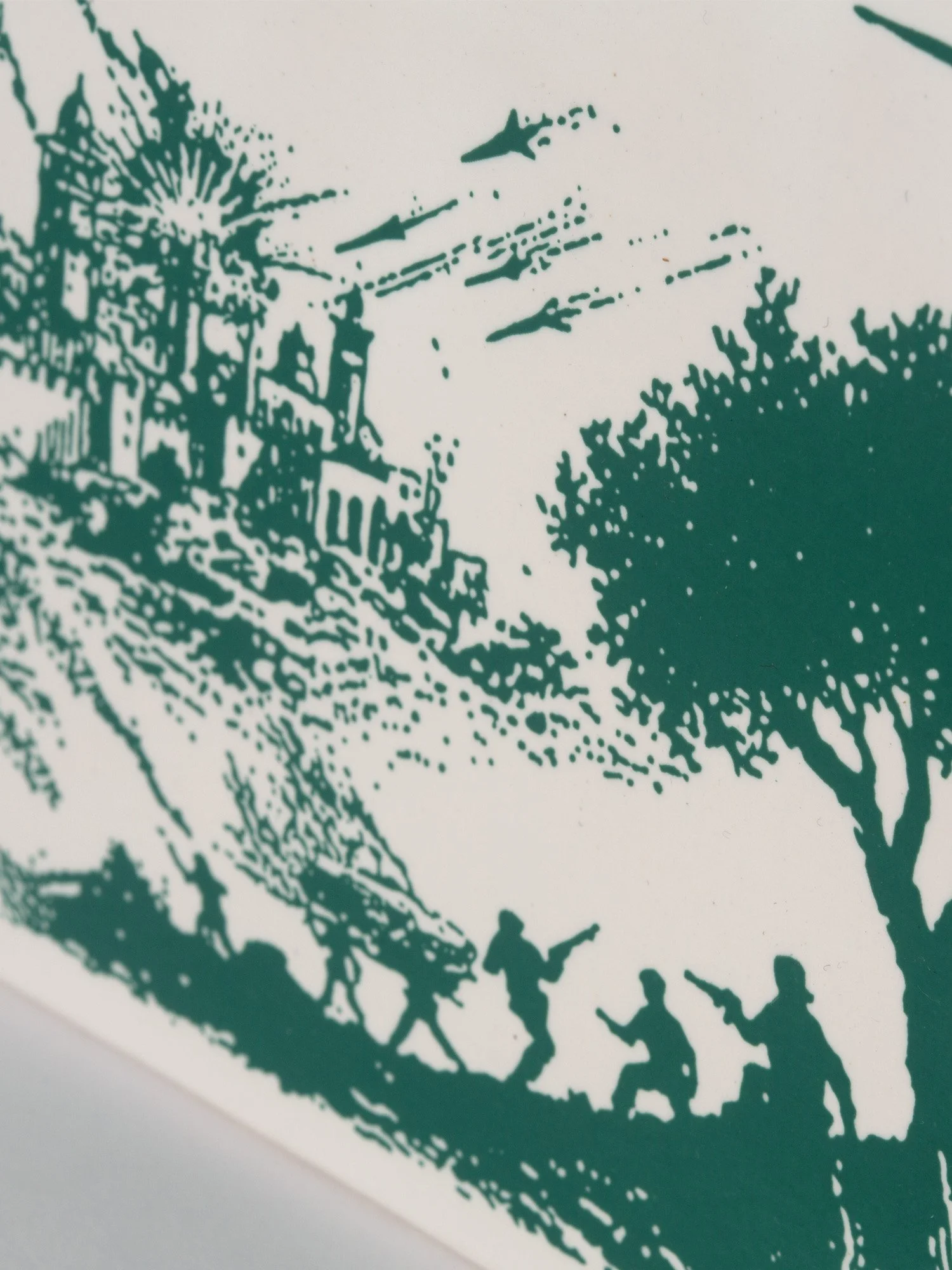 Image 5 of 8
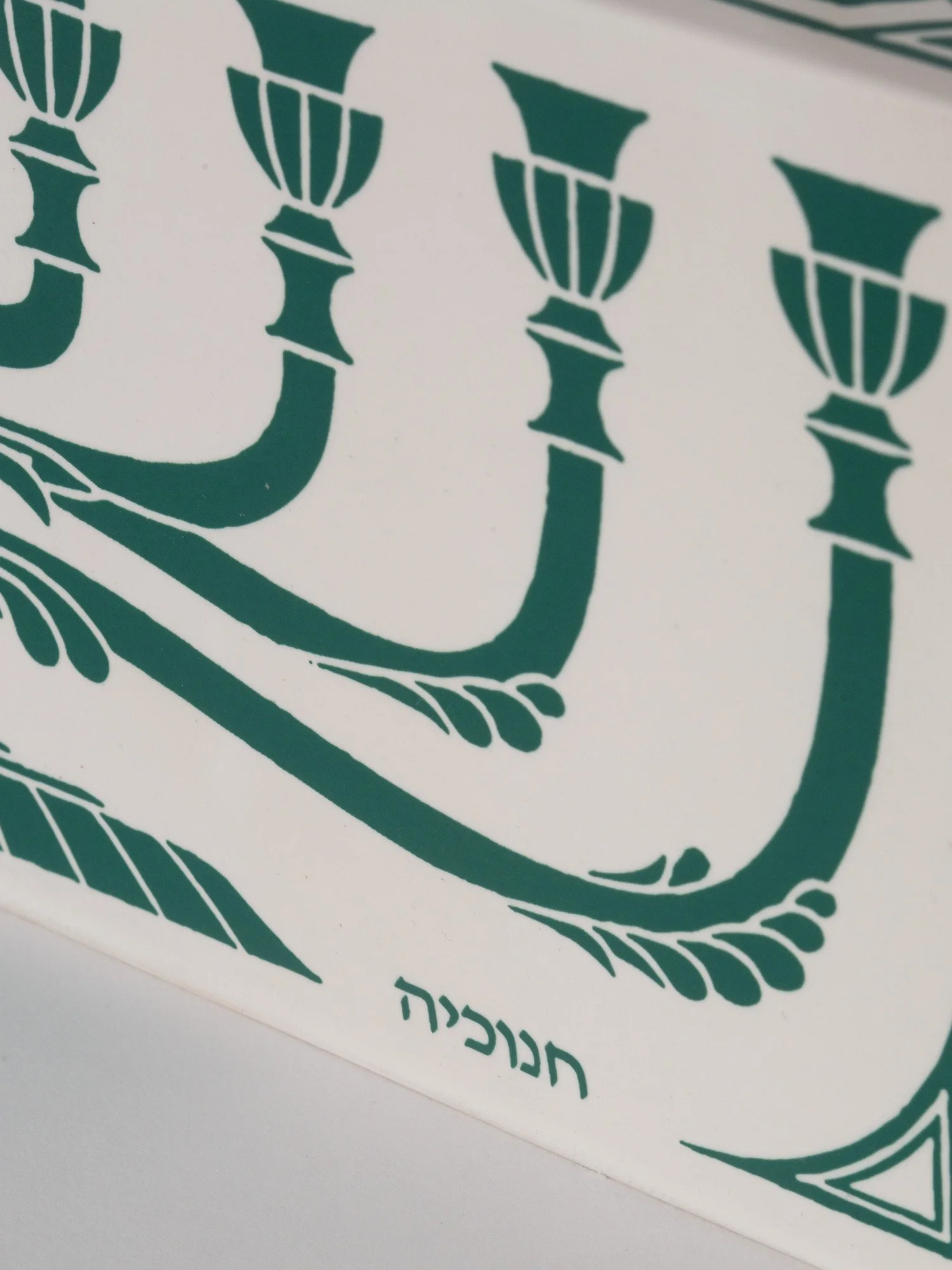 Image 6 of 8
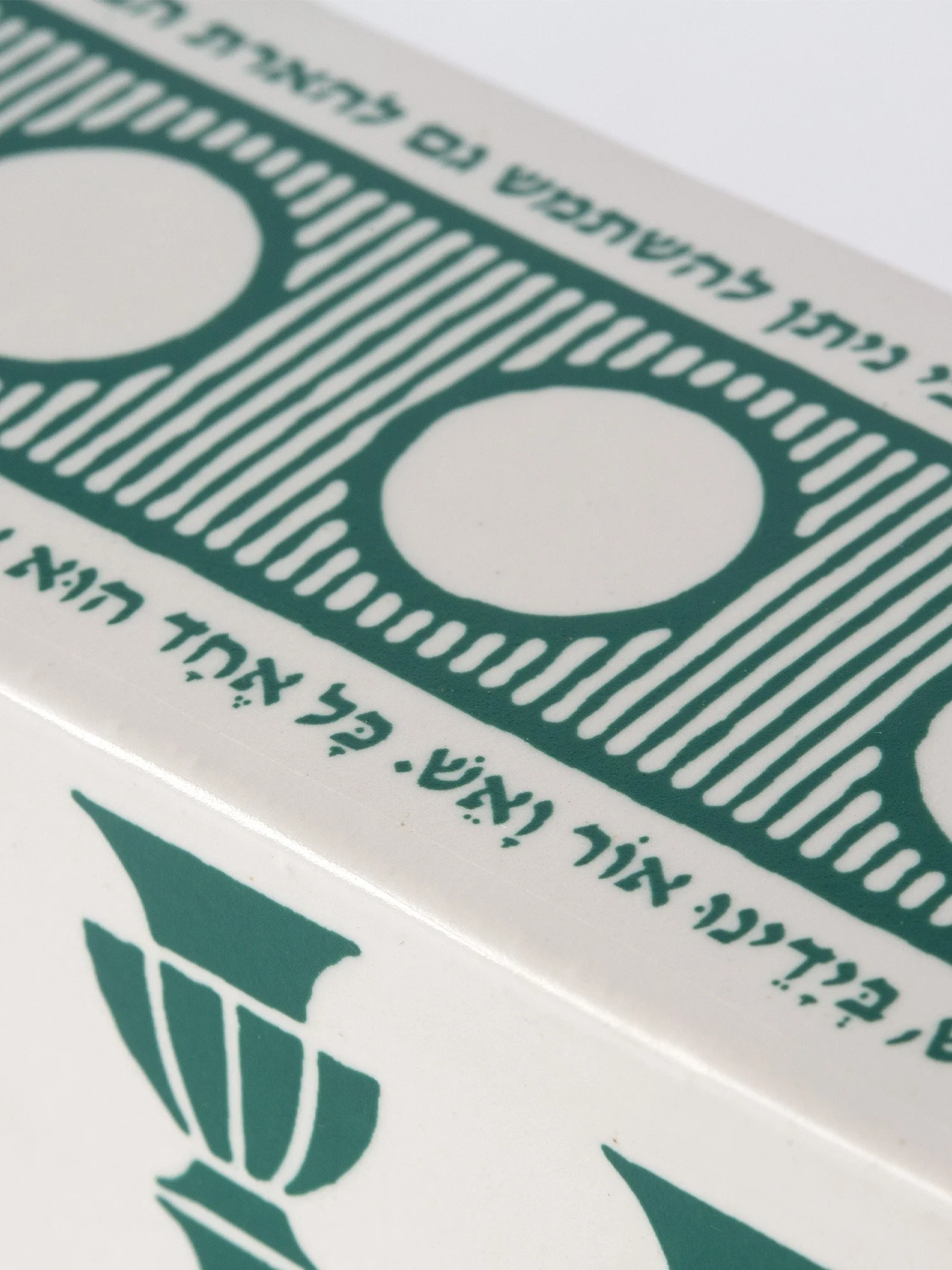 Image 7 of 8
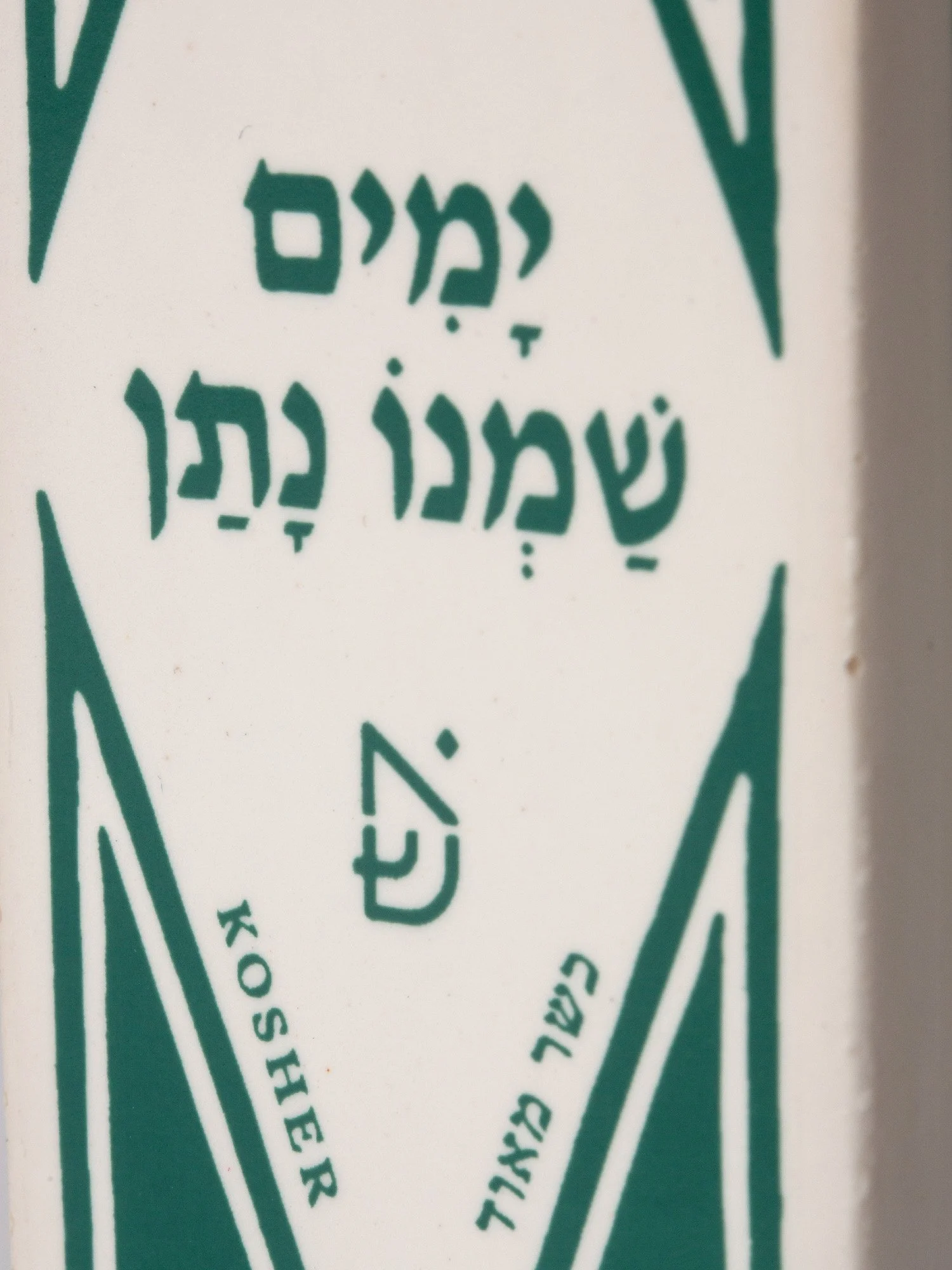 Image 8 of 8
Ori Shifrin Anavi is an industrial designer and multidisciplinary visual creator, and a graduate of the Industrial Design Department at Shenkar. His practice operates at the intersection of serial design and material culture, positioned between art and design. Through industrial products, craft, and material experimentation, he explores the presence of objects in public and private space, often using them as raw material for experiential and performative works that invite response and participation.
Shifrin Anavi is an alumnus of the EDR Center Design Program and the recipient of the Edmond de Rothschild Design Award 2025 for Emerging Product Designer.
The collaboration between Con and Ori Shifrin Anavi began almost three years ago, during an initial meeting driven by a shared desire to explore working together. While the intention was present early on, the collaboration itself took shape only a few months ago, sparked by a phone call from Ori and a renewed urgency to create.
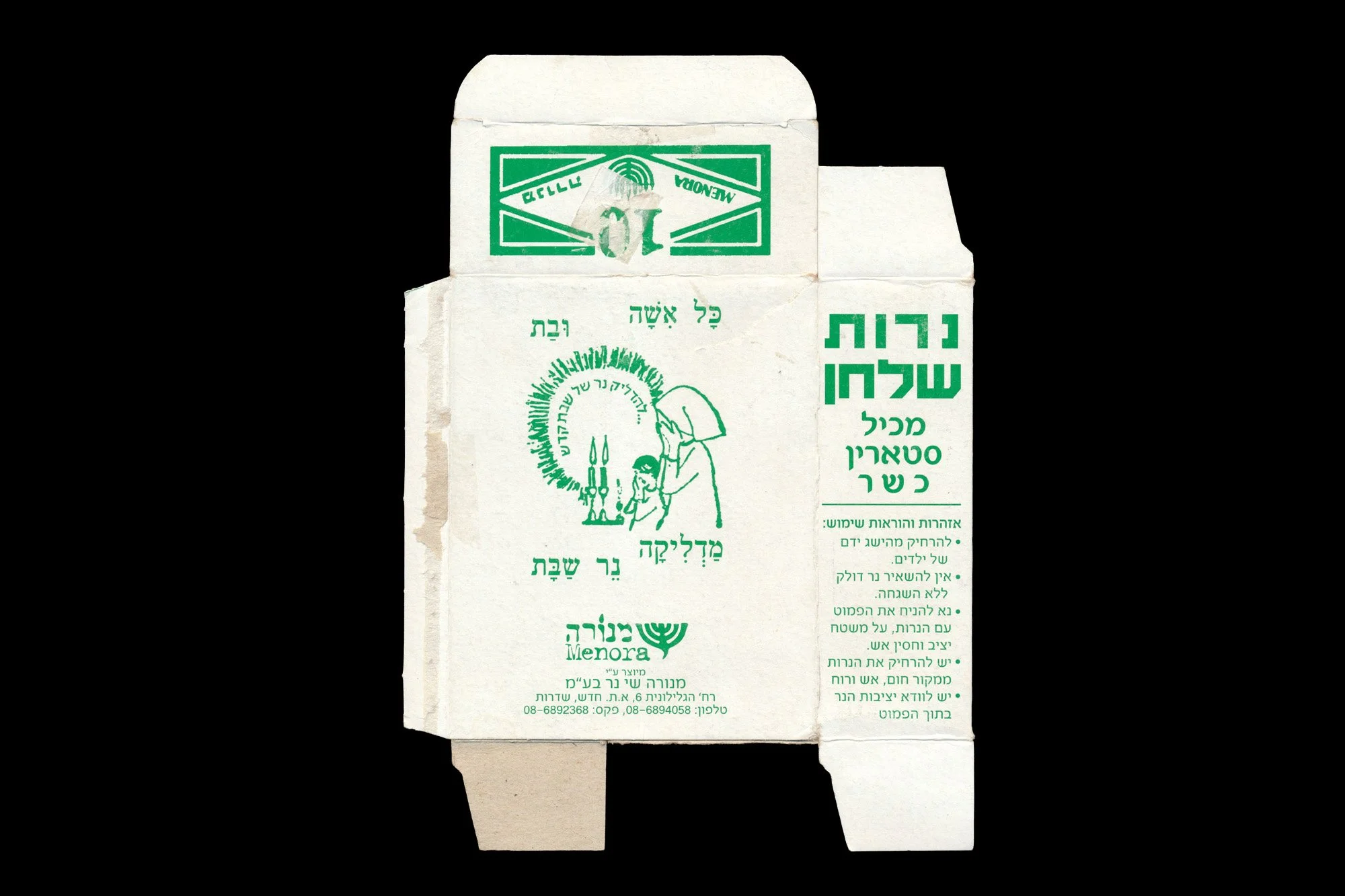
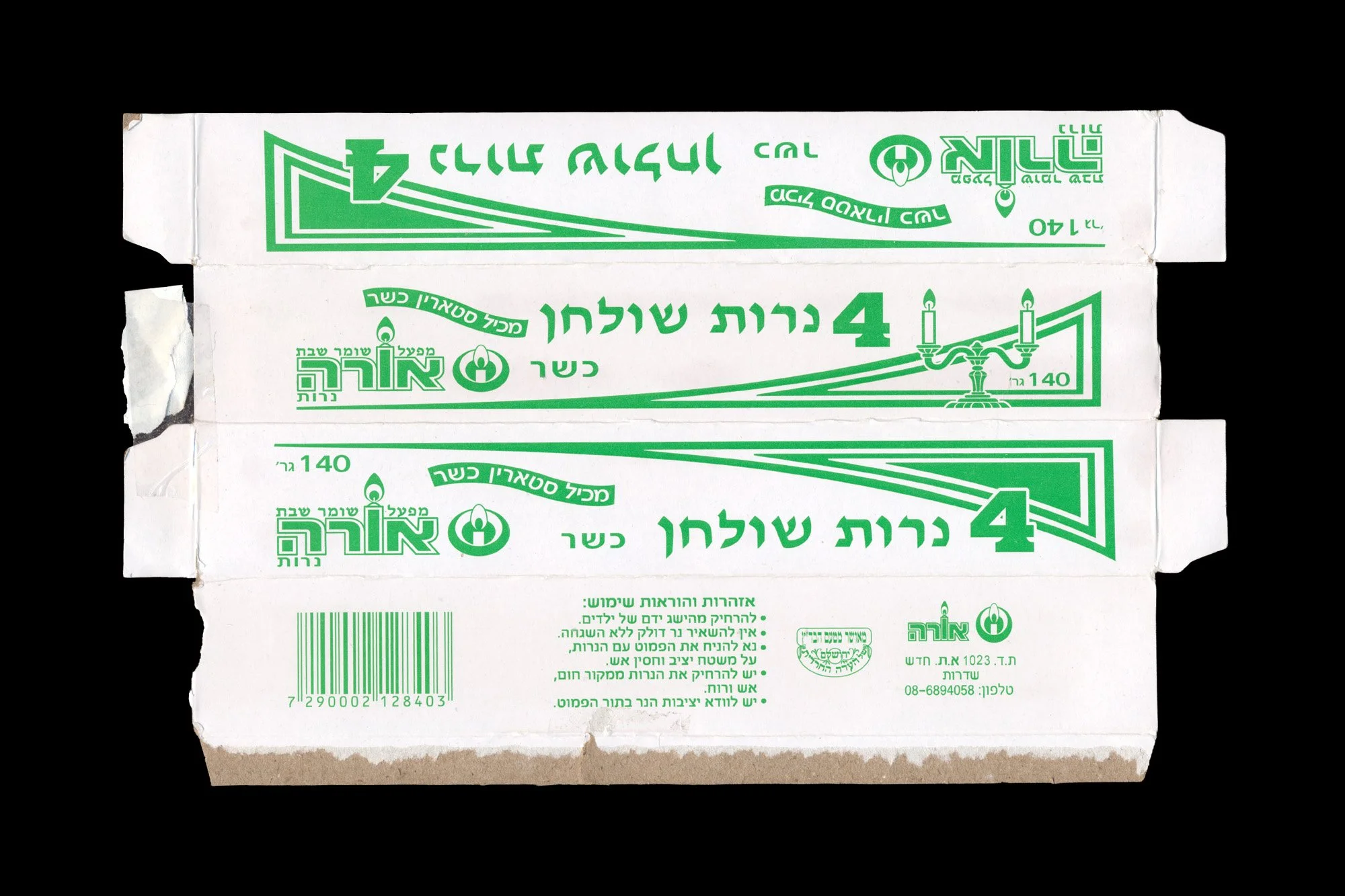
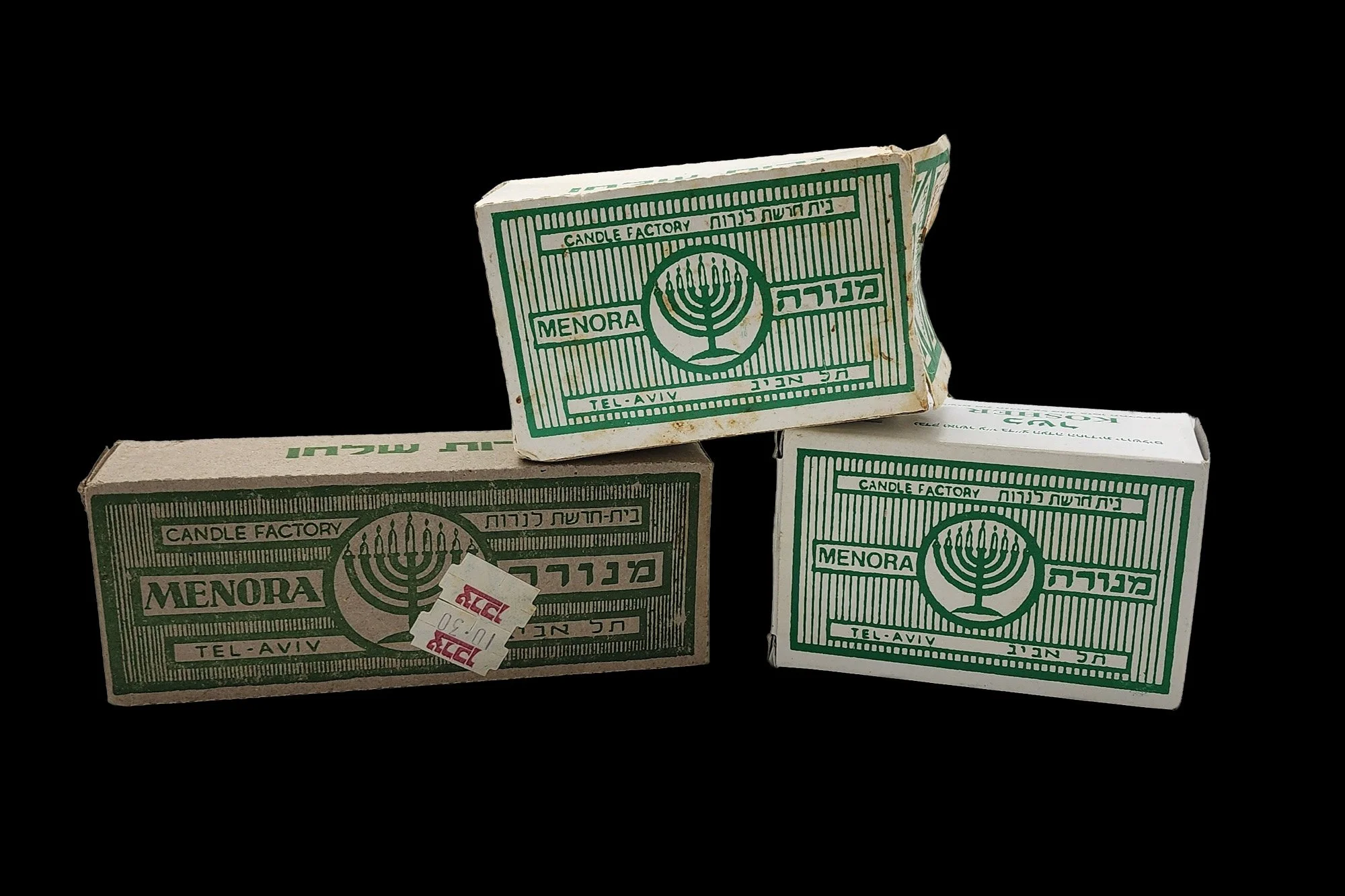
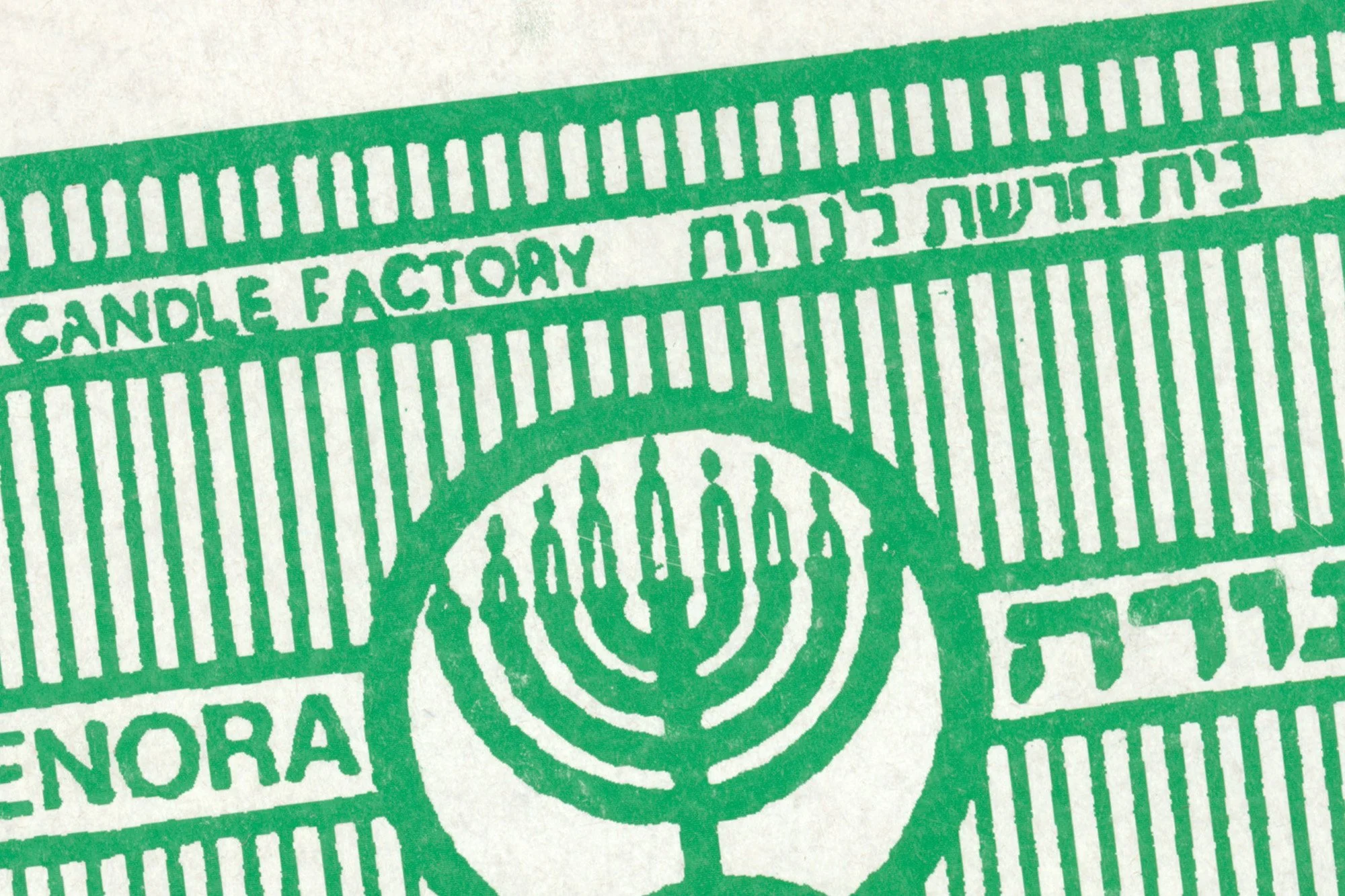
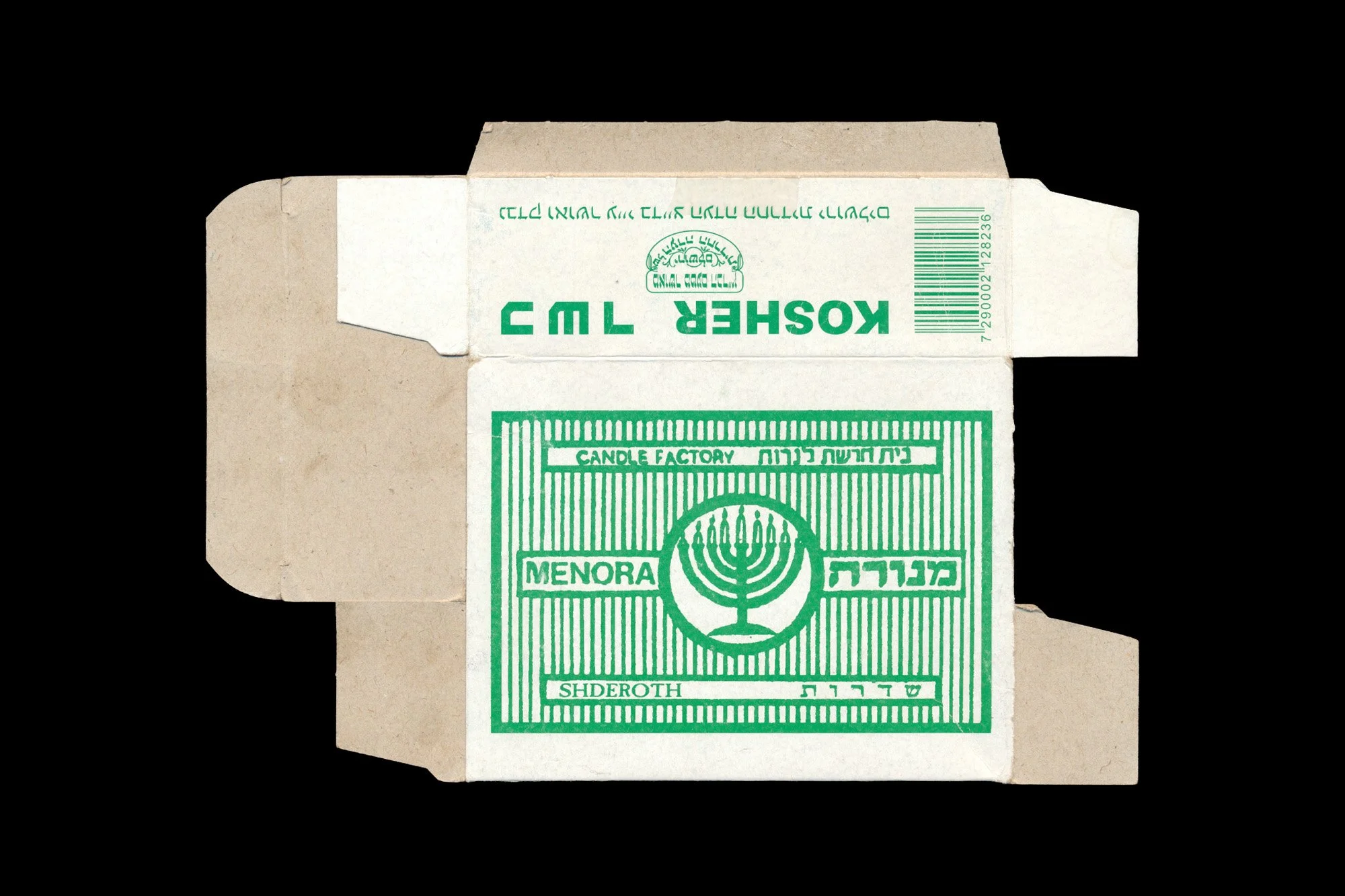
From the outset, the goal was to produce an object that brings together Ori’s deep engagement with ceramics and Con’s ongoing exploration of ephemera, symbolism, and Israeli design culture. The process unfolded as an ongoing ping pong between graphic design and object design, with a clear anchor point emerging early on: the iconic candle box.
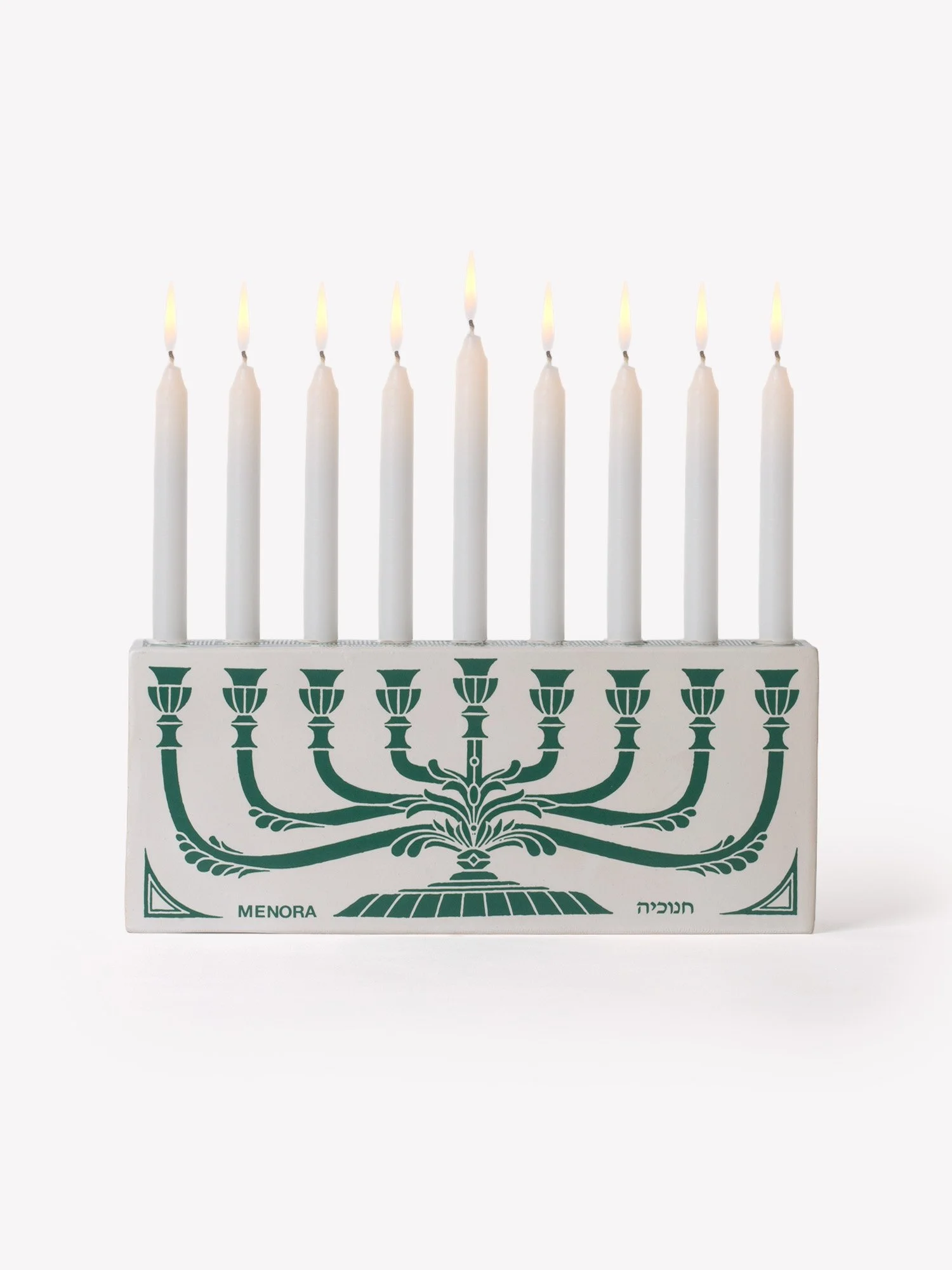
The result is a ceramic Hanukkiah conceived as a singular, one time object. At first glance, it appears almost innocent, resembling a familiar, everyday box. On closer inspection, it reveals layers that speak to Israeli existence and its tensions: between secularity and Judaism, between the mundane and the sacred, and between routine life and belief in the shadow of a reality reshaped since October 7.
The object was produced using a ceramic mold, allowing for precision within a handcrafted process. The graphic elements were applied using ceramic decals.
The Hanukkiah underwent two firings: an initial firing with glaze, followed by a second, slower firing at a lower temperature, enabling the decal and graphic design to be permanently embedded into the surface.
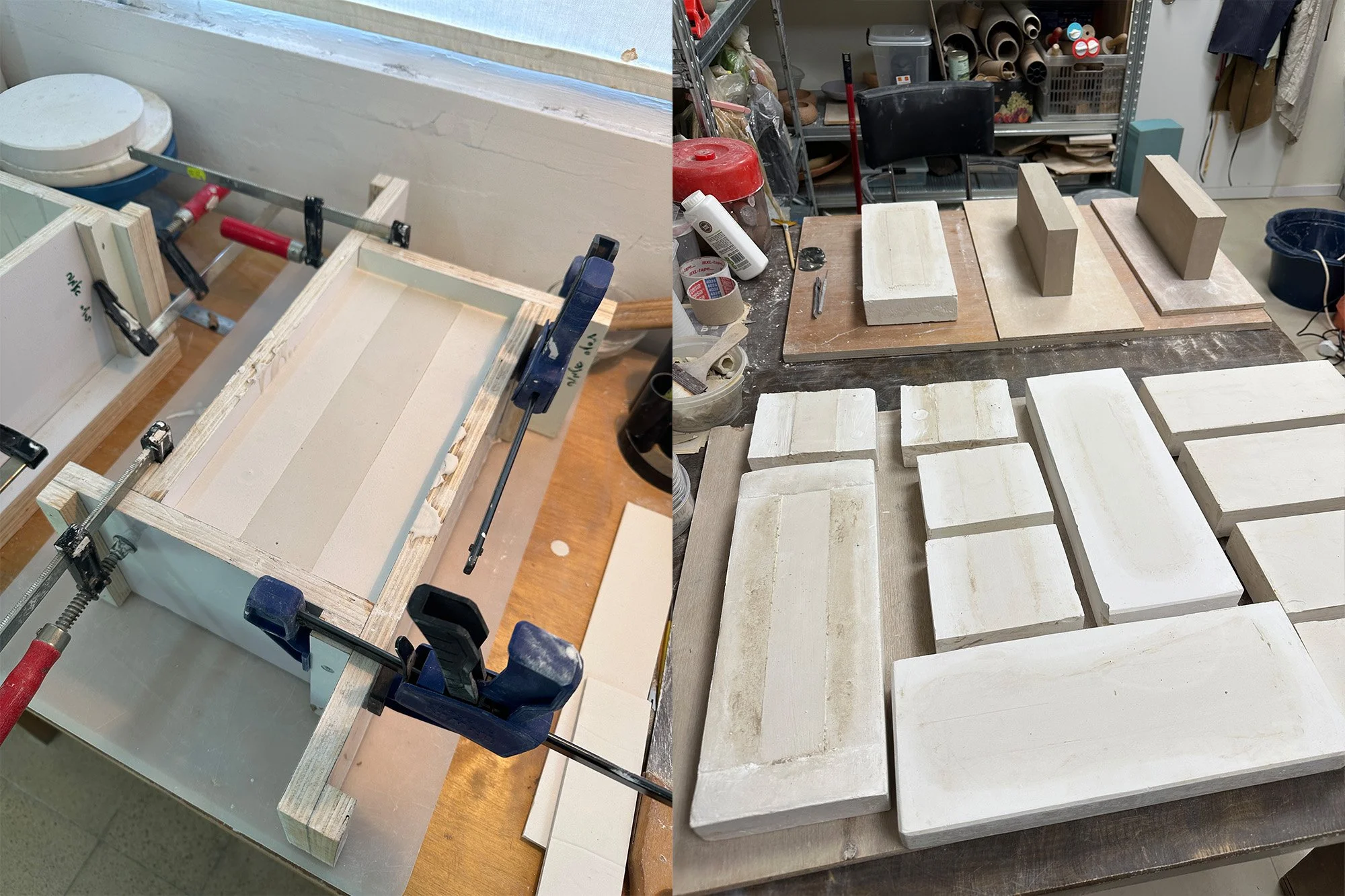
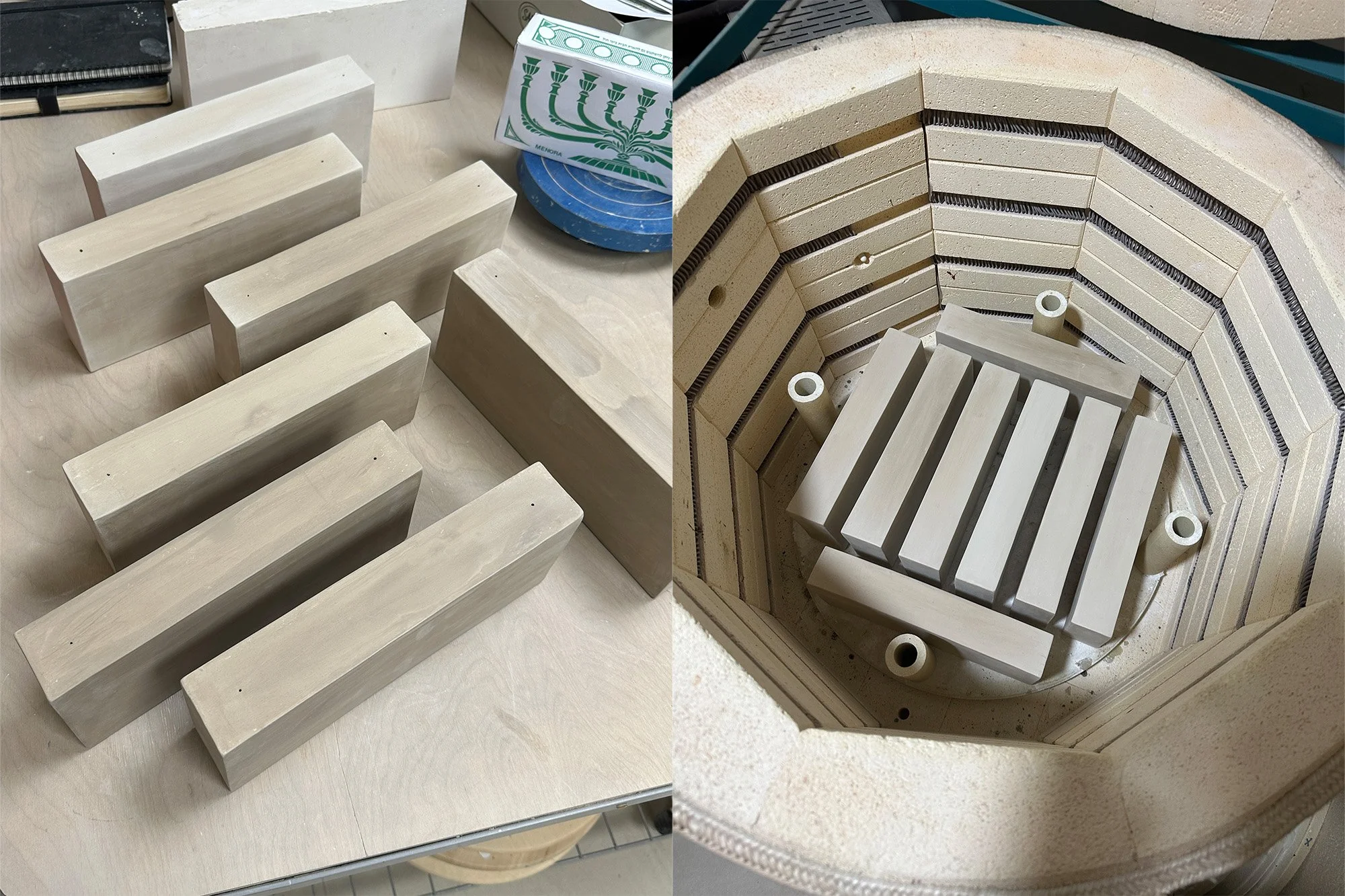
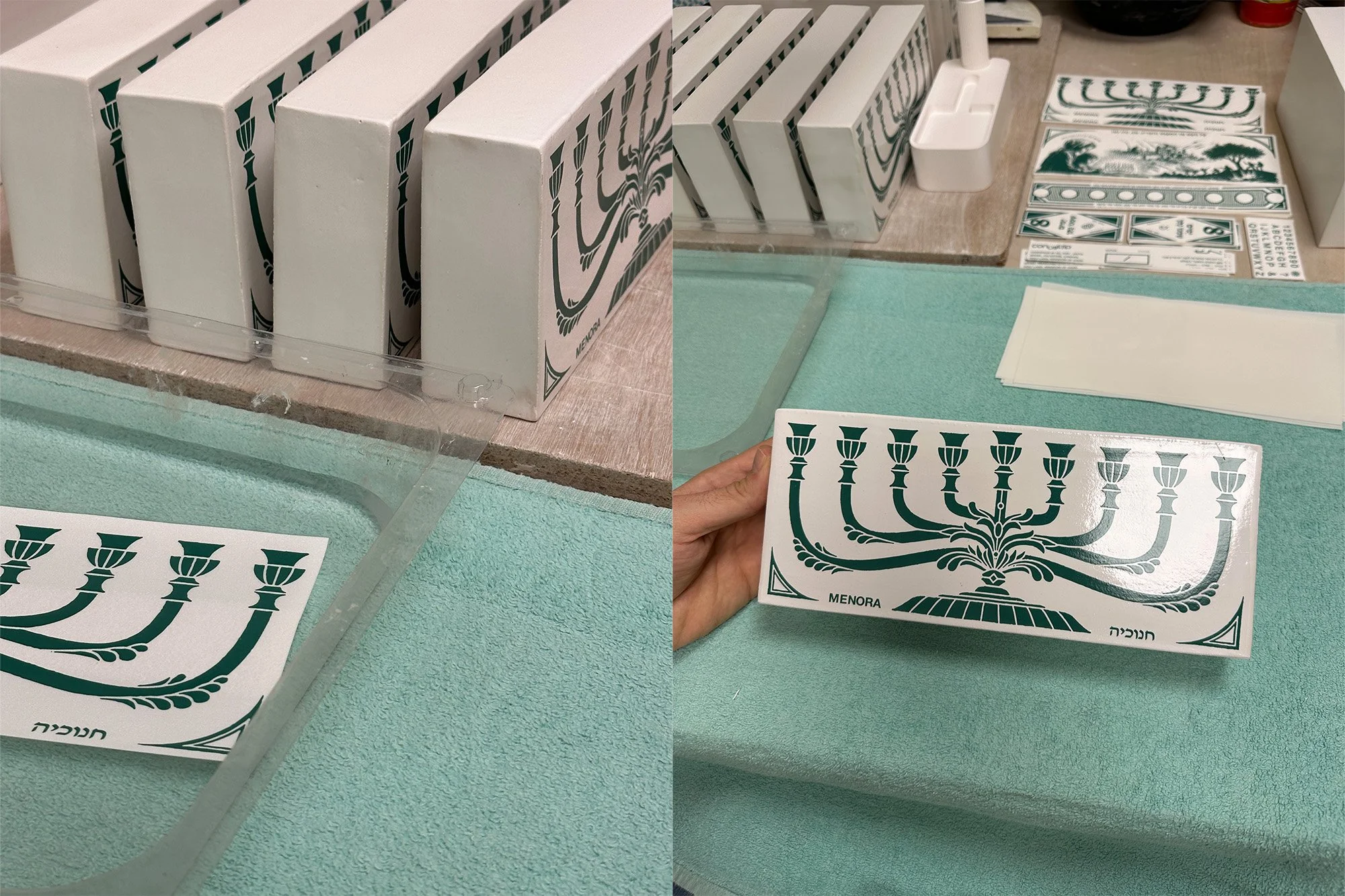
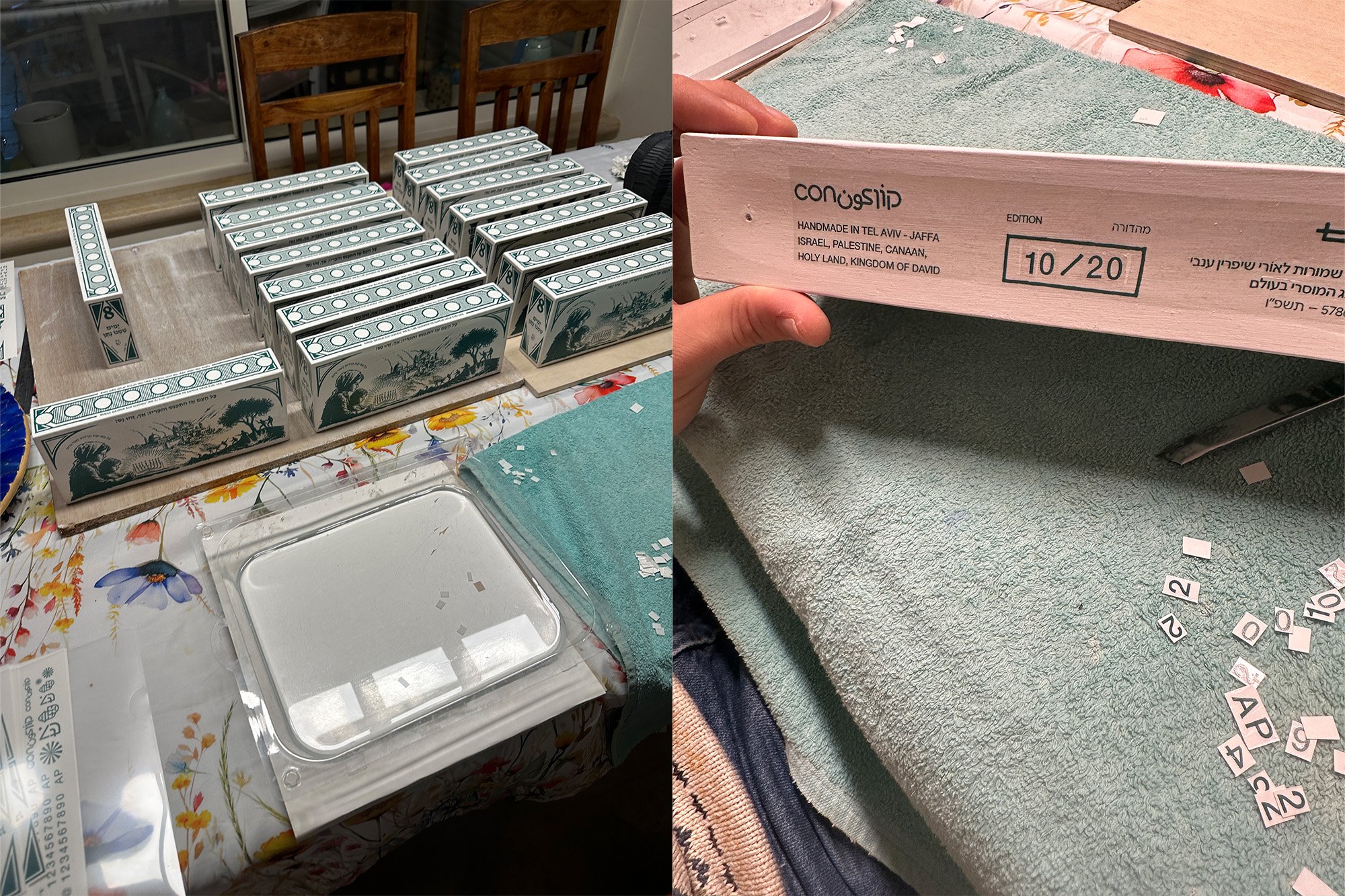
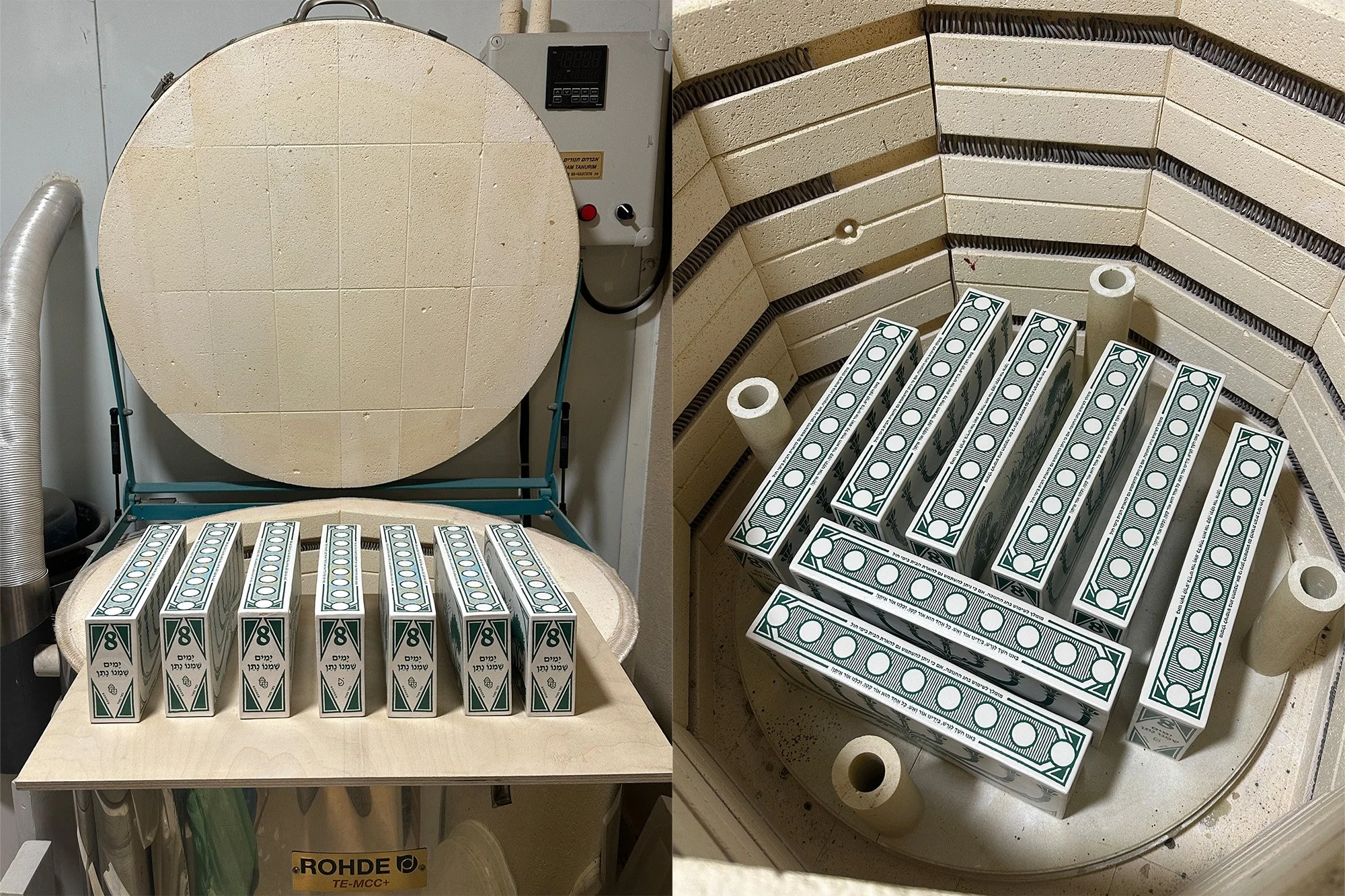
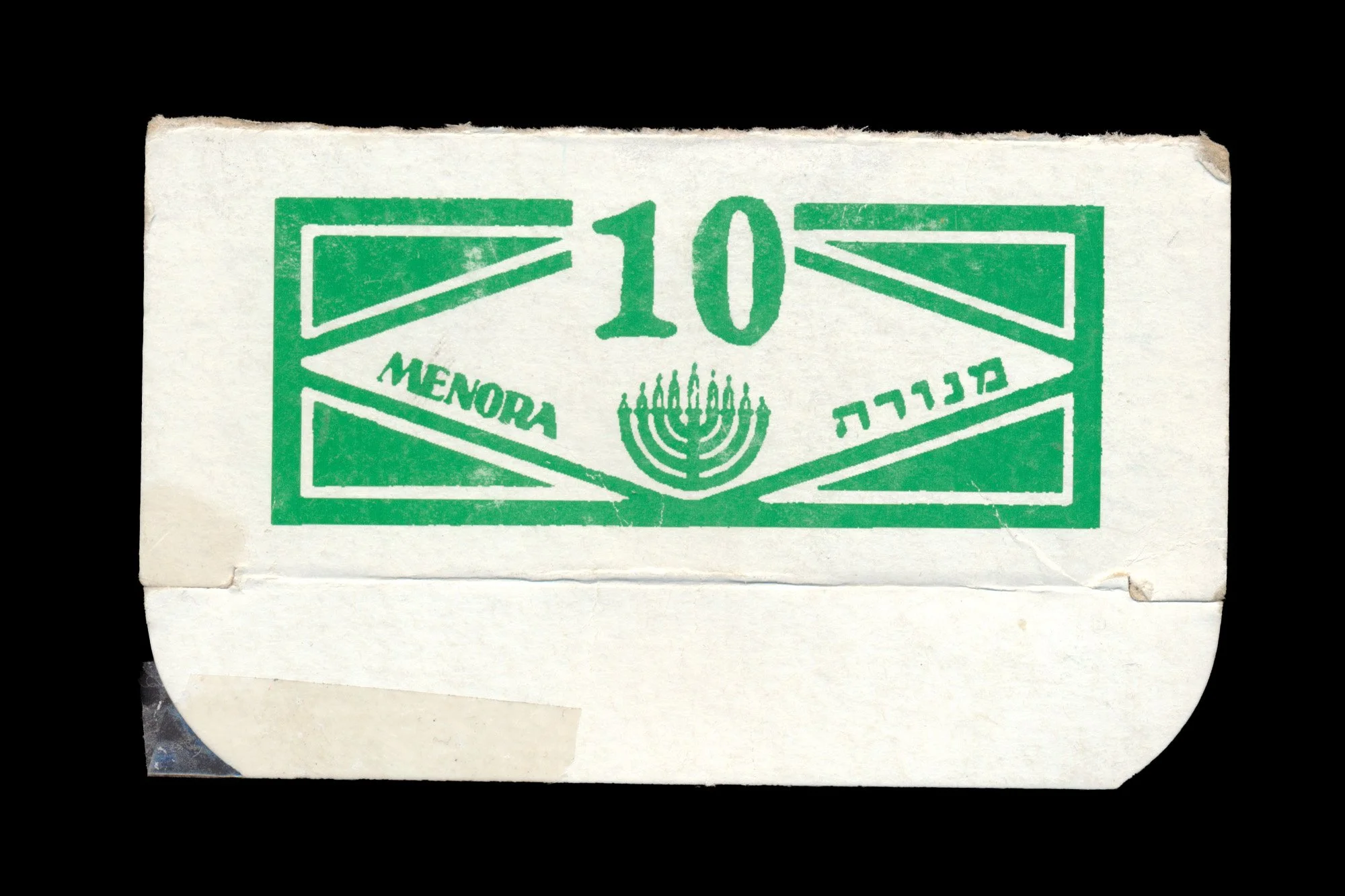
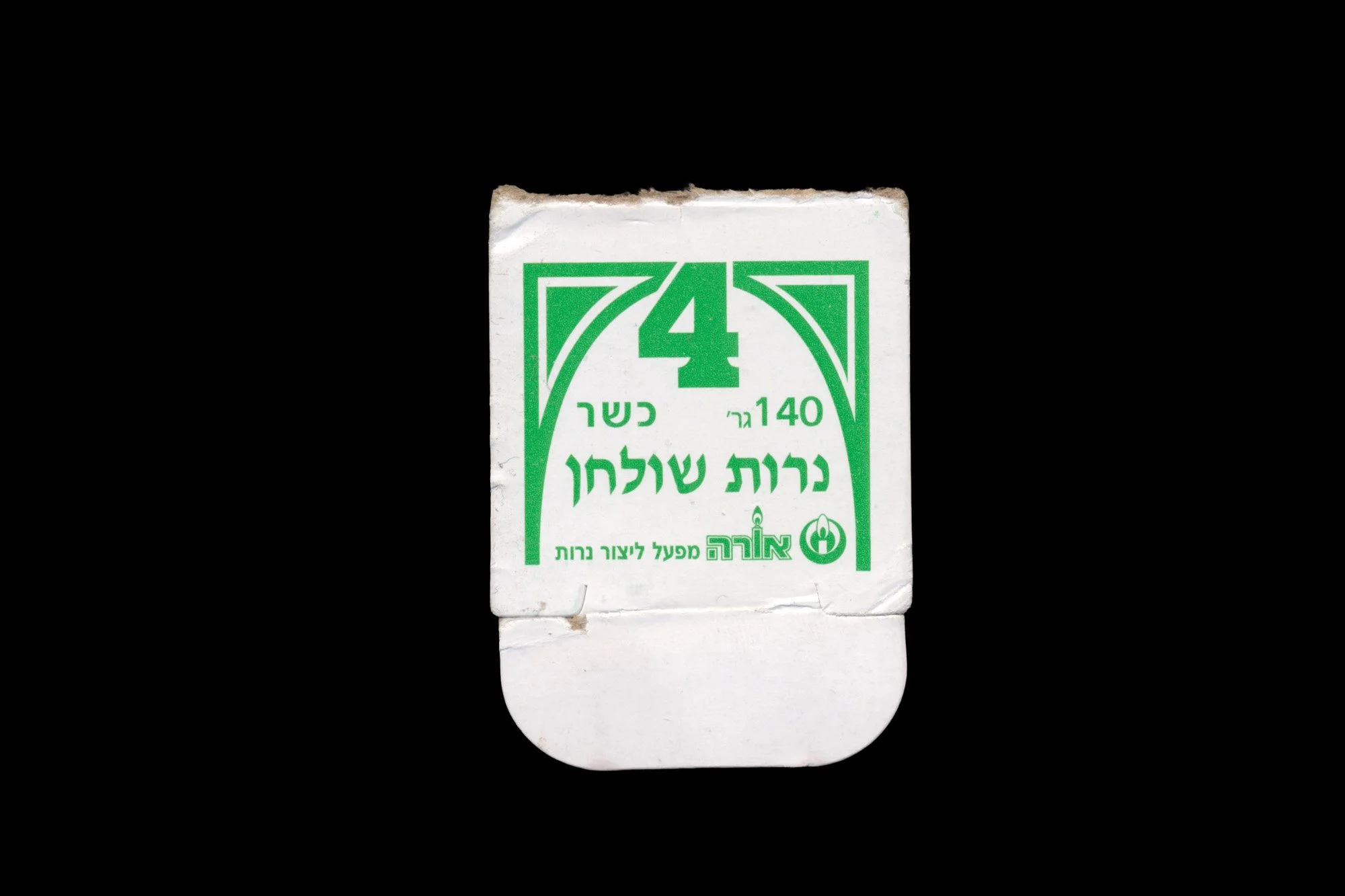
Table candles hold a quiet yet persistent role in Israeli society. Their presence is defined by repetition, modesty, and familiarity. For over fifty years, the table candle box with its green print on a white surface has remained almost unchanged, becoming an iconic visual marker of everyday life.
The factory responsible for this enduring design is located in Sderot, a city that embodies the ongoing security and political complexities of Israel. This geographic reality adds an additional layer to the object, tying a simple domestic product to a broader national condition.
Candles exist at the intersection of the sacred and the ordinary. They carry ritual, memory, and a touch of transcendence, while remaining cheap, accessible, and utilitarian. They move seamlessly between holy moments and everyday necessity, between the holiday table and moments of emergency.
Engaging with this object allows for a reflection on the tensions embedded within Israeli society: between secularity and religion, between private belief and public structure, and between faith and the realities shaping contemporary life. Through its simplicity, the candle becomes a fragile yet potent symbol of coexistence, contradiction, and identity.